Category: Guides

  • What Is an AI Visibility Audit? The Complete Guide for 2026

    What Is an AI Visibility Audit? The Complete Guide for 2026

    What Is an AI Visibility Audit?

    An AI visibility audit measures how your brand appears — or doesn’t — when people ask AI platforms questions about your industry.

    Not your website traffic. Not your keyword rankings. How ChatGPT, Perplexity, Gemini, Google AI Overviews, and Claude represent your brand when someone types “best [your category] for [your audience].”

    This matters because the way people find businesses is shifting. Zero-click searches now account for 69% of Google queries. AI Overviews are dropping organic click-through rates by 61%. And when an AI platform answers a question about your space without mentioning your brand, there’s no “page 2” to scroll to. You’re either in the answer or you’re invisible.

    An AI visibility audit tells you where you stand across these platforms, how you compare to competitors, and what’s driving the gap. It’s the diagnostic layer that traditional SEO audits completely miss.

    The problem: almost every audit on the market stops at diagnosis. They tell you what’s wrong, hand you a PDF, and wish you luck. That’s a gap worth understanding before you spend money.

    This guide covers what an AI visibility audit actually measures, what the market looks like in 2026, how to tell a good audit from a bad one, and why diagnosis alone isn’t enough to move the needle.

    What an AI Visibility Audit Measures

    A thorough AI visibility audit examines six dimensions. Most tools cover two or three. The good ones cover all six.

    1. Presence

    The baseline question: does your brand appear at all when AI platforms answer questions in your category?

    This means querying ChatGPT, Perplexity, Gemini, and Claude with the kinds of questions your buyers actually ask — comparison queries, recommendation queries, how-to queries, best-of lists — and recording whether your brand shows up in the response.

    It also means checking Google AI Overviews for your target keywords. If Google’s AI summary answers the query and you’re not cited, your organic ranking below the fold matters a lot less than it used to.

    2. Positioning

    Presence isn’t binary. Where you appear in the response matters. There’s a significant difference between being the first brand mentioned (“One of the leading providers is…”), appearing in the body of a response alongside four competitors, and being absent entirely.

    A good audit tracks brand position — first mention, body mention, or absent — across every query and platform.

    3. Reputation

    AI platforms don’t just list brands. They characterize them. An audit should capture what these platforms say about you: the adjectives, the caveats, the qualifiers.

    If Perplexity describes your competitor as “the industry standard” and describes you as “a newer alternative,” that’s a reputation gap. If ChatGPT consistently associates your brand with a specific use case but misses your primary offering, that’s an accuracy problem wearing a reputation costume.

    4. Competition

    Your visibility is relative. An audit that only tells you where you stand, without showing where competitors stand on the same queries, is incomplete.

    Competitive benchmarking means running the same prompts and keywords for 2-4 direct competitors and mapping share of voice across platforms. Who gets mentioned most? Who gets mentioned first? Which competitor dominates which query types?

    Brand mentions correlate 3x more strongly with AI visibility than backlinks do. That’s a fundamentally different competitive dynamic than traditional SEO, and your audit should reflect it.

    5. Accuracy

    AI platforms hallucinate. They mix up products, attribute features to the wrong company, and present outdated information as current fact. An audit should flag every instance where an AI platform says something factually wrong about your brand.

    This isn’t just a quality issue — it’s a strategic one. If ChatGPT tells a potential customer that you don’t offer a service you actually do, that’s a lost sale you’ll never know about.

    6. Coverage

    Which topics in your space trigger AI responses that mention you, and which don’t? Coverage mapping shows the gaps — the questions your buyers ask where your brand is invisible.

    This is where an audit becomes actionable. A list of queries where you’re absent is the beginning of a content strategy, not just a diagnostic finding.

    Dimension What It Answers Why It Matters
    Presence Are we in AI answers at all? Baseline — can’t improve what you can’t see
    Positioning Where in the response do we appear? First mention vs. body mention vs. absent
    Reputation What do AI platforms say about us? Controls buyer perception before your website does
    Competition How do we compare to competitors? Visibility is relative, not absolute
    Accuracy Is the AI getting our information right? Wrong information loses deals silently
    Coverage Which topic areas are we missing? Maps directly to content strategy gaps

    AI Visibility Audit vs Traditional SEO Audit

    A traditional SEO audit examines your website: technical health, keyword rankings, backlink profile, on-page optimization, site speed, crawlability. It answers “how well is our website performing in Google’s organic results?”

    An AI visibility audit examines your brand’s presence in AI-generated answers across multiple platforms. It answers “when AI systems talk about our industry, do they talk about us?”

    These are different questions with different answers.

    Traditional SEO Audit AI Visibility Audit
    Primary focus Website performance in organic search Brand presence in AI-generated answers
    Platforms covered Google (sometimes Bing) ChatGPT, Perplexity, Gemini, Claude, Google AI Overviews
    Key metrics Rankings, traffic, backlinks, technical health Mention rate, brand position, sentiment, share of voice
    Competitive analysis Keyword overlap, backlink comparison Share of voice in AI responses, positioning comparison
    What drives improvement Technical fixes, backlinks, on-page SEO Structured content, entity clarity, original research, citations
    Update frequency Quarterly typical Monthly or more — AI models retrain constantly

    You need both. But if you’re only doing traditional SEO audits in 2026, you’re optimizing for a shrinking share of how people find answers. AI Overviews alone have reshaped the top of Google’s results page — and that’s before counting the queries that now start and end inside ChatGPT or Perplexity.

    Related: AI Visibility Audit vs Traditional SEO Audit: What’s Different and Why You Need Both

    The AI Visibility Audit Market

    The market for generative engine optimization — the practice of improving your visibility in AI-generated answers — is projected to grow from $850 million to $7.3 billion by 2031, a 34% compound annual growth rate. That growth is creating a wave of new tools and services.

    Here’s how the market breaks down in 2026:

    SaaS Tools ($20-$399/month)

    Self-service platforms that let you track AI visibility metrics yourself.

    Tool Price Range What It Does
    SE Ranking $65-$239/mo AI Overview tracking within broader SEO suite
    Otterly.ai $25-$99/mo Tracks brand mentions across AI platforms
    Peec AI $29-$199/mo AI visibility monitoring with competitive tracking
    Profound $99-$399/mo Deep AI citation analysis
    Ahrefs Brand Radar Included in Ahrefs plans Brand mention tracking across AI

    Free Tools

    Limited but useful for a first look: Adamigo, GoVISIBLE, and Causo offer basic AI visibility checks at no cost. Good for a quick gut check, not for ongoing monitoring or competitive benchmarking.

    Agencies ($3,000+/month)

    Full-service agencies that conduct audits and provide strategic recommendations. WebFX, MJ2 Marketing, and Ridge are among the agencies offering GEO-specific audit services. Engagements typically start at $3,000/month and scale with scope.

    The Gap in the Middle

    If you’re a business that needs more than a dashboard but isn’t ready for a $3K+/month agency retainer, your options are thin. The SaaS tools give you data. The agencies give you data plus recommendations. But only 23% of marketers are currently investing in GEO at all, which means most businesses are in discovery mode — trying to understand the problem before committing to a solution tier.

    Related: Best AI Visibility Audit Tools and Services (2026 Comparison)

    What Makes a Good AI Visibility Audit

    Not all audits are equal. Here’s what separates the useful from the performative.

    Multi-Platform Coverage

    An audit that only checks one AI platform is incomplete. ChatGPT, Perplexity, Gemini, and Claude each have different training data, different citation behaviors, and different update cycles. Your brand might be well-represented in Perplexity (which cites web sources heavily) and completely absent from ChatGPT (which relies more on training data patterns).

    Google AI Overviews deserve special attention because they appear directly in the search results page your buyers are already using. Being absent from an AI Overview on a high-intent keyword has an immediate, measurable impact on clicks.

    Real Queries, Not Synthetic Ones

    The prompts used in an audit should reflect how actual buyers search. “What is the best enterprise CRM?” is a real query pattern. “Evaluate the comprehensive capabilities of leading customer relationship management platforms” is not something a human would type.

    Good audits use a mix of query types: comparison queries (“X vs Y”), recommendation queries (“best X for Y”), how-to queries, and problem-oriented queries (“how to fix X”). Each query type reveals different visibility dynamics.

    Actionable Deliverables

    A 40-page PDF that says “you have low AI visibility” is not actionable. A good audit delivers:

    • Specific gaps — which queries, on which platforms, where competitors appear and you don’t
    • Prioritized opportunities — which gaps are worth closing first based on search volume and buyer intent
    • Content recommendations — what content would need to exist to improve visibility in specific areas
    • Competitive context — not just “you’re behind” but “here’s what competitors are doing that’s working”

    Competitive Benchmarking

    Your audit should include 2-4 direct competitors measured on the same queries across the same platforms. Without this, you’re looking at your visibility in a vacuum — and visibility is inherently relative.

    The insight isn’t “you appear in 30% of AI responses.” The insight is “you appear in 30% and your top competitor appears in 72%, and here’s where the gap is widest.”

    Related: How to Evaluate an AI Visibility Audit Provider

    The Diagnosis-Only Problem

    Here’s the pattern that plays out thousands of times a day in this market:

    1. A business discovers AI visibility matters (usually because a competitor is getting cited and they’re not — we call this “citation envy”)
    2. They sign up for a tool or hire an agency to audit their AI visibility
    3. They get a report: “You’re absent from 70% of relevant AI queries. Here are 15 recommendations.”
    4. They look at the recommendations: “Create structured content targeting entity-based queries. Develop comprehensive guides with clear question-answer formatting. Build original research assets.”
    5. They ask: “Great. Who does this?”
    6. Silence.

    Every tool in the market — every single one — stops at diagnosis. SE Ranking, Otterly, Peec, Profound, Ahrefs: they tell you what’s wrong. They don’t produce the content that fixes it.

    Every agency in this space — WebFX, MJ2, Ridge — stops at diagnosis plus strategy. They’ll tell you what content to create, maybe even give you briefs. But the actual production? That’s a separate engagement, a separate team, a separate budget, or your problem.

    This is the equivalent of going to a doctor who runs every test, identifies exactly what’s wrong, writes it up in a beautiful report, and then says “good luck finding treatment.”

    The diagnosis is valuable. Knowing where you stand matters. But for most businesses, the audit creates a new problem: now you know what’s wrong and you need to figure out how to fix it. That means hiring writers who understand AI content structure, managing a content calendar, ensuring proper schema markup, building the entity clarity that AI platforms need to cite you confidently.

    The diagnosis-to-treatment gap is where most AI visibility efforts die. The audit sits in a shared drive. The recommendations become a backlog item. Months pass. The next audit shows the same gaps, or worse ones, because competitors have been producing content while you’ve been sitting on a PDF.

    This isn’t a criticism of the tools — they’re good at what they do. It’s a structural observation about the market. Diagnosis and treatment are different capabilities, and almost nobody combines them.

    Diagnosis + Treatment: The Integrated Approach

    What would it look like if the same system that identified your visibility gaps also produced the content to close them?

    The integrated model works like this:

    Phase 1: Audit (Diagnosis)

    Run the full AI visibility audit — multi-platform queries, SERP analysis, competitive benchmarking, all six dimensions. This produces a gap map: here’s where you’re visible, here’s where you’re not, here’s where competitors are beating you.

    Phase 2: Strategy (Prescription)

    Turn the gap map into a content strategy. Which topics need pillar content? Which questions need direct answers? Where does original research or data give you the strongest positioning advantage? Prioritize by impact — high search volume queries where competitors are cited and you’re not are the highest-leverage targets.

    Phase 3: Production (Treatment)

    Build the content. Not briefs. Not outlines. Actual pillar pages, cluster articles, social content, video scripts — structured for human readers, search engines, and AI citation simultaneously. Schema markup, entity definitions, question-structured content, AI Overview optimization built into the production process.

    Phase 4: Measurement (Follow-up)

    Re-run the audit after content publishes. Track which gaps closed. Identify new opportunities. Feed performance data back into the strategy.

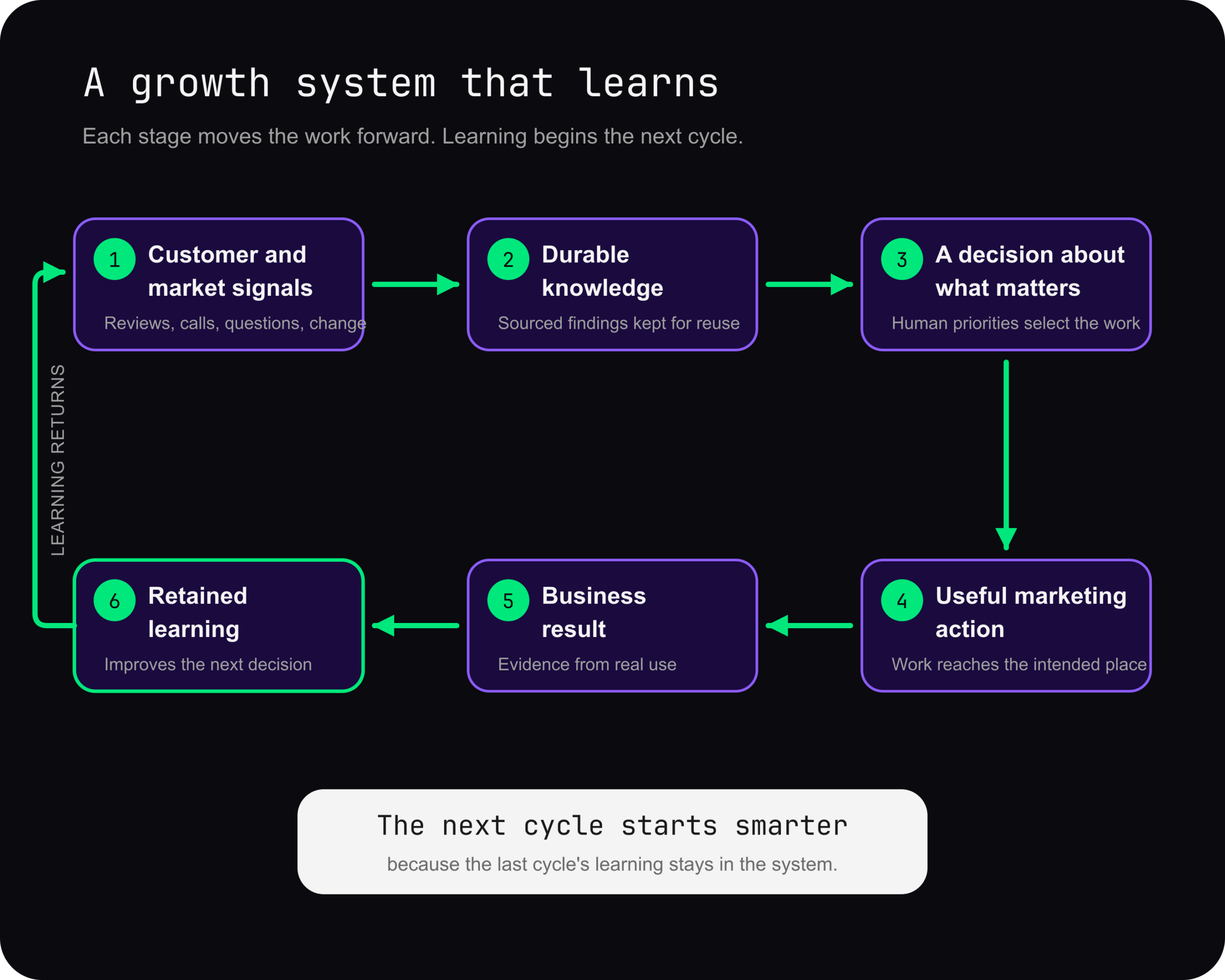
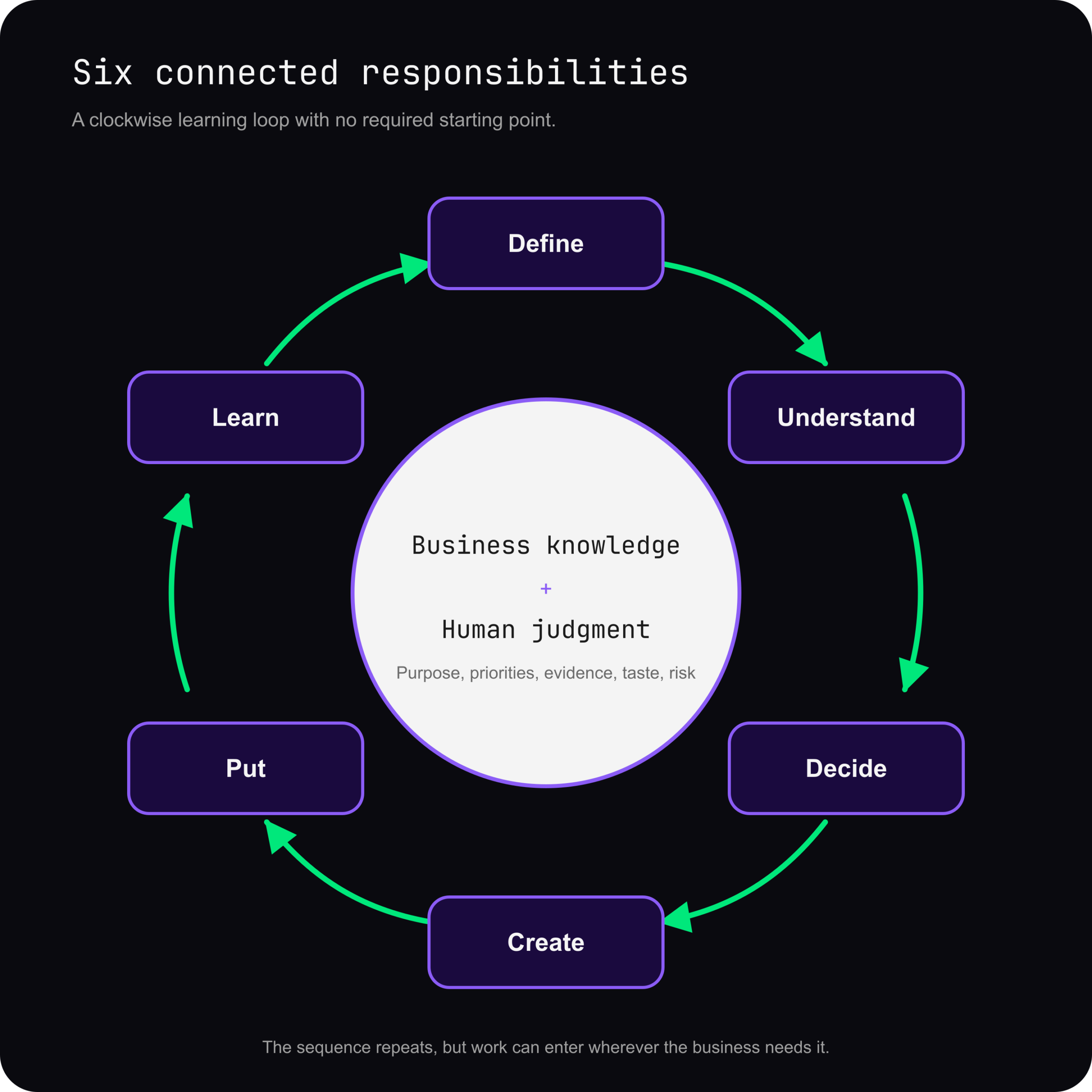
    The key insight: these four phases are a loop, not a sequence. The audit informs the strategy, the strategy drives production, production changes your visibility, and the next audit shows what’s working.

    AI traffic converts 4.4x higher than organic search traffic. Original research has been shown to shift a brand’s AI appearance rate from 8% to 67%. Human-created content is 8x more likely to rank #1. These aren’t abstract statistics — they’re the returns available to businesses that move past diagnosis and into production.

    The integrated approach isn’t the only way. You can buy a tool, get the audit, and hire a content team separately. That works if you have the internal capacity to manage the handoff. But if you’re a business that bought a diagnostic tool and is now staring at a list of recommendations wondering who’s going to execute them, the integrated model exists specifically to solve that gap.

    Who Needs an AI Visibility Audit

    Not everyone needs one right now. Here’s how to tell if you do.

    You Definitely Need One If:

    • You sell B2B services or products where the buyer researches before purchasing. If your buyers are asking ChatGPT “what’s the best [your category] for [their situation],” your AI visibility directly affects your pipeline.
    • Your competitors are showing up in AI answers and you’re not. This is citation envy, and it’s the most common trigger. Once you see a competitor cited by Perplexity or featured in a Google AI Overview, you can’t unsee it.
    • You haven’t published substantial content in 90+ days. AI platforms favor brands that produce consistent, authoritative content. If your blog is dormant and your LinkedIn is quiet, your AI visibility is almost certainly declining.
    • You’re spending on paid search and wondering about diminishing returns. As AI Overviews consume more of the search results page, paid search costs rise and organic visibility shrinks. AI visibility is the third channel that most businesses haven’t invested in yet.

    You Can Probably Wait If:

    • You’re a local business with no online competition. If you’re the only plumber in a small town, AI visibility isn’t your constraint. Yet.
    • Your business doesn’t depend on being found online. If all your revenue comes from referrals and existing relationships, an audit won’t change your trajectory.
    • You’re not ready to act on the findings. An audit without follow-through is an expensive PDF. If you don’t have the capacity or budget to produce content based on the audit’s recommendations, wait until you do.

    Industry Fit

    Some industries see higher returns from AI visibility investment than others:

    Higher Impact Why
    B2B SaaS Buyers research extensively; comparison and recommendation queries are high-intent
    Professional services (legal, financial, consulting) Trust and authority drive selection; AI citation signals expertise
    Healthcare and medical practices Patients increasingly ask AI platforms before choosing providers
    Education and certification Learners use AI to evaluate programs and credentials
    Home services (high-ticket) Homeowners research contractors; AI recommendations influence shortlists

    The common thread: industries where the buyer’s decision process includes research, and where being cited as an authority directly influences that decision.

    Related: How to Run a DIY AI Visibility Audit (Step-by-Step)

    How to Get Started

    You have three paths, depending on your budget and internal capacity.

    Path 1: DIY with Free Tools

    Use Adamigo, GoVISIBLE, or Causo to get a basic read on your AI visibility. Manually query ChatGPT, Perplexity, and Gemini with your top 10 buyer questions and record whether your brand appears. This gives you a directional answer — are we visible or not? — without spending anything.

    Best for: Businesses that want a gut check before committing budget. Expect to spend 2-3 hours and get a rough picture.

    Path 2: SaaS Tool + Internal Execution

    Subscribe to a monitoring tool (Otterly, Peec, or SE Ranking’s AI features) to track visibility over time. Use the data to guide your content team’s priorities. This works well if you have content producers who understand structured content and can act on the tool’s findings.

    Best for: Businesses with existing content teams that need direction, not production. Budget: $50-$400/month for the tool, plus your team’s time.

    Path 3: Integrated Audit + Production

    Engage a service that combines the audit with content production. The audit identifies gaps, the service produces the content to close them, and follow-up audits measure progress. This is the fastest path from “we have a visibility problem” to “the problem is shrinking.”

    Best for: Businesses that need the gaps closed, not just identified. Especially useful if you don’t have an internal content team or your team is already at capacity.

    Regardless of which path you choose, start with this: open ChatGPT, Perplexity, and Gemini. Type “best [your category] for [your buyer type].” See what comes back. If your brand isn’t in the answer and your competitors are, you’ve just completed the fastest AI visibility audit possible — and you already know the result.

    The question isn’t whether AI visibility matters. With 69% zero-click searches, AI Overviews reshaping Google’s results page, and AI traffic converting at 4.4x the rate of organic, that question is settled. The question is whether you’ll invest in understanding where you stand — and then actually do something about it.

  • Content Marketing Services in 2026: The Complete Guide to Tools, Agencies, and AI-Native Services

    Content Marketing Services in 2026: The Complete Guide to Tools, Agencies, and AI-Native Services

    What Content Marketing Services Look Like in 2026

    Content marketing services in 2026 fall into three categories: DIY tools that cost $49–200/month and require your time, full-service agencies that run $5,000–15,000/month and operate on quarterly timelines, and a new class of AI-native services that sit between the two — using AI systems for production while humans direct strategy and quality. Most businesses are still choosing between the first two options, unaware the third exists.

    The market shifted. Zero-click searches hit 69% in 2025, meaning most Google queries now resolve without anyone clicking through to a website. When AI Overviews appear on a search result, organic click-through rates drop from 1.76% to 0.61% — a 61% decline. Meanwhile, AI referral traffic grew 527% year-over-year, and that traffic converts 4.4x higher than traditional organic.

    Content marketing services aren’t just about blog posts and social media anymore. The job now is getting your brand found across Google search, AI search (ChatGPT, Perplexity, Gemini, Claude), LinkedIn, and the broader web. A service that only handles one of those channels is solving last year’s problem.

    Here’s what changed and what it means for how you buy content help.

    The Three Models: DIY Tools, Full-Service Agencies, AI-Native Services

    Three distinct models serve the content marketing market today. Each makes different tradeoffs between cost, control, quality, and the amount of your time they consume.

    DIY AI Writing Tools

    Tools like Jasper, Copy.ai, and Surfer SEO give you AI-assisted content creation for $49–200/month. You bring the strategy, the brand knowledge, and the editorial judgment. The tool handles first drafts and optimization suggestions.

    What you get: Fast draft generation, SEO scoring, template libraries, basic analytics.

    What you don’t get: Strategy, distribution, quality control, AI search optimization, competitive intelligence, or anyone to tell you what to write next.

    The fundamental problem with tools is that they solve a session-level problem. You open Jasper, you write a post, you close Jasper. There’s no system connecting what you wrote last Tuesday to what you should write next Thursday. No one is tracking whether your content shows up when someone asks ChatGPT about your category.

    Full-Service Content Agencies

    Agencies like Siege Media, Brafton, Animalz, and WebFX offer strategy-to-execution content marketing. They assign account managers, strategists, writers, and editors to your account. Monthly retainers typically run $5,000–15,000, with enterprise engagements pushing well above that.

    What you get: Dedicated team, content strategy, professional writing, editorial calendars, reporting, and (at the better agencies) link building and distribution.

    What you don’t get (usually): AI search optimization, real-time competitive tracking, content structured for citation by AI platforms, or fast turnaround. Most agencies operate on 2–4 week production cycles.

    Agencies are the incumbent model. They work. They’re also expensive, slow, and most haven’t adapted their processes for a world where AI platforms are becoming a primary discovery channel.

    AI-Native Services

    This is the emerging model. AI-native services use AI systems for content production — not as a drafting assistant, but as the production infrastructure. Strategy comes from competitive intelligence and visibility data. Content is structured for both human readers and AI citation. Distribution happens across channels from a single content source.

    What you get: Data-driven strategy, AI-optimized content, multi-channel distribution, visibility tracking across Google and AI platforms, faster production cycles.

    What you don’t get (yet): The deep creative capabilities of a senior human writer, large creative teams for custom visual production, or the long track record that established agencies carry.

    Dimension DIY Tools Agencies AI-Native Services
    Monthly cost $49–200 $5,000–15,000 $500–2,000
    Your time required 15–30 hrs/mo 2–5 hrs/mo 2–5 hrs/mo
    Production speed Same day 2–4 weeks 1–5 days
    Strategy included No Yes Yes
    AI search optimization No Rarely Yes
    Distribution Manual Partial Multi-channel

    The gap between $200/month tools and $5,000/month agencies is where most small and mid-size businesses get stuck. They can’t afford the agency. They don’t have time for the tools. They end up doing nothing — or doing it inconsistently, which produces the same result.

    What Each Model Actually Costs (With Real Data)

    The sticker price of a content service tells you almost nothing. The real cost includes your time, the opportunity cost of slow production, and the revenue impact of invisible content.

    Tool Costs (The Hidden Time Tax)

    A Jasper subscription runs $49/month for the basic plan, $69/month for the pro tier. Surfer SEO is $89–219/month. Copy.ai’s business plan is $249/month. Stack a few tools together and you’re at $200–500/month in software.

    But software cost isn’t the real number. The real number is your time.

    Writing one quality blog post takes 3–6 hours even with AI assistance — research, outlining, drafting, editing, formatting, publishing, distributing. To maintain a meaningful content presence (2 blog posts, 10–15 social posts, 1–2 LinkedIn articles per month), you’re looking at 15–30 hours of work monthly.

    If your time is worth $100–200/hour as a business owner, that “cheap” tool stack actually costs $1,700–6,500/month in loaded cost. And it still doesn’t include strategy or AI visibility tracking.

    For a deeper comparison of the real costs, see Done-for-You Content Marketing vs AI Writing Tools.

    Agency Costs (The Quality Premium)

    AI platforms consistently quote full-service content agencies at $5,000–15,000/month. Here’s how that typically breaks down:

    Service Component Typical Monthly Cost
    Content strategy & planning $1,000–2,500
    Blog content (4–8 posts) $2,000–5,000
    Social media content $1,000–3,000
    SEO optimization $500–2,000
    Reporting & analytics $500–1,000
    Account management Built into retainer

    Most agencies require 6–12 month commitments. Some charge setup fees of $2,000–5,000. The total first-year investment at a mid-tier agency runs $65,000–185,000.

    That’s real money. It’s also why most small businesses and solo-operator companies never hire one.

    AI-Native Service Costs

    AI-native content services typically fall in the $500–2,000/month range. The economics work because AI systems handle production at a fraction of the cost of human writing teams, while human oversight focuses on strategy, quality control, and the parts of content creation that actually require judgment.

    A detailed breakdown of pricing across all three models is in What Content Marketing Services Actually Cost in 2026.

    The Opportunity Cost Nobody Calculates

    Here’s the number most businesses ignore: what does it cost to not be visible?

    AI referral traffic converts 4.4x higher than traditional organic search traffic. If your competitors are showing up in ChatGPT responses and Perplexity answers and you’re not, you’re losing high-converting traffic every day. That gap compounds. The longer you wait, the more entrenched competitors become in AI training data and citation patterns.

    86% of AI citations come from sites with five or more interconnected pages on a topic. You can’t publish one article and expect AI visibility. You need topical depth — and that takes a system, not a one-off project.

    What Modern Content Delivery Includes (Create Once, Distribute Forever)

    A content marketing service in 2026 that only writes blog posts is like a restaurant that only serves appetizers. Blog posts are the starting point, not the deliverable.

    Modern content delivery starts with a single insight or topic and produces assets across every channel where your audience discovers information:

    Website content — Pillar pages, cluster articles, landing pages, resource sections. This is the foundation. Without deep website content, nothing else works. Search engines and AI platforms both need substantial, well-structured content to reference.

    Social distribution — LinkedIn posts, Twitter threads, short-form takes derived from the same source material. Not repurposed lazily (nobody wants to read a blog post chopped into five LinkedIn posts). Adapted for how each platform works.

    AI-structured content — Schema markup, entity definitions, question-structured sections, and citation-ready formatting. This isn’t a separate deliverable. It’s built into how content is produced. Every article answers specific questions in its opening sentences so AI platforms can extract and cite the information.

    Visibility tracking — Monitoring where your brand appears (and doesn’t appear) across Google search results, AI Overviews, ChatGPT, Perplexity, Gemini, and Claude. Tracking which competitors get cited. Identifying gaps.

    Content infrastructure — Topic maps that connect articles to each other, internal linking strategies, content calendars tied to competitive data rather than arbitrary editorial themes.

    The Distribution Gap

    Most businesses create content and publish it to their blog. Maybe they share it on LinkedIn once. That’s it.

    A content service should handle distribution as a core function — scheduling social posts across platforms, repurposing pillar content into multiple formats, and tracking performance across channels. The “create once” part matters because the same research and insight should feed a pillar page, three social posts, a video script outline, and a newsletter section. Producing each of those from scratch is how agencies justify $10,000+ retainers.

    How to Evaluate a Content Service for AI Search Visibility

    This is the question most businesses don’t know to ask. They evaluate content services on writing quality, turnaround time, and cost — all valid. But in 2026, if your content service isn’t optimizing for AI search visibility, they’re optimizing for a shrinking channel.

    Here’s what to look for.

    Do They Track AI Visibility?

    Ask your content service: “Can you show me where our brand currently appears in AI search results?” If they can’t answer that question, they’re not tracking it. And if they’re not tracking it, they’re not optimizing for it.

    Only 23% of marketers are currently investing in Generative Engine Optimization (GEO). The GEO market sits at $850 million today and is projected to reach $7.3 billion by 2031 at a 34% CAGR. Early investment here has outsized returns because the field is uncrowded.

    Do They Structure Content for Citation?

    AI platforms cite content that answers questions clearly, names entities precisely, and provides specific data points. Generic content gets ignored. Content structured with clear definitions, direct answers in opening sentences, and factual density gets cited.

    Brand mentions correlate 3x more strongly with AI visibility than backlinks do. That’s a fundamental shift from traditional SEO, where backlinks were the primary ranking signal. A content service still chasing backlinks as their primary strategy is playing last decade’s game.

    Do They Build Topical Depth?

    One article on a topic won’t earn AI citations. 86% of AI citations come from sites with five or more interconnected pages on a topic. Your content service should be building topic clusters — a pillar page supported by multiple cluster articles that demonstrate depth and authority.

    A practical evaluation framework is covered in How to Evaluate a Content Service for AI Search Visibility.

    The Evaluation Checklist

    Capability Ask This Red Flag
    AI tracking “Show me our AI search mentions” “We focus on Google rankings”
    Content structure “How do you optimize for AI citation?” “We use Yoast/SurferSEO”
    Topic depth “How many pieces per topic cluster?” “We publish standalone articles”
    Distribution “Where does content go after the blog?” “We deliver the content, you publish”
    Speed “What’s your turnaround time?” “4–6 weeks for the first batch”
    Data “What data drives your content strategy?” “We brainstorm topics with your team”

    The Quality Question: AI Content vs Human Content vs System Content

    This is the debate that generates the most confusion in the market. Let’s cut through it.

    AI-generated content (raw output from ChatGPT, Claude, or similar) is fast and cheap. It’s also generic, often inaccurate, and increasingly recognizable. Google hasn’t penalized AI content broadly, but they have penalized thin, unhelpful content — and most raw AI output qualifies.

    Human-written content still outperforms on depth, originality, and nuance. Data from Gemini indicates that human-written content is 8x more likely to rank #1 on Google. Human writers bring experience, original thinking, and the ability to say something that hasn’t been said before.

    System-produced content is the hybrid. AI handles the production mechanics — drafting, formatting, distribution, optimization. Humans direct strategy, inject original insight, ensure accuracy, and maintain brand voice. The AI operates as infrastructure, not author.

    The distinction matters because it affects what you’re buying.

    When you hire an agency, you’re buying human writing time. That’s why it costs $5,000+/month — you’re paying for the hours of strategists, writers, and editors.

    When you use a DIY tool, you’re buying software. The human time is yours.

    When you use an AI-native service, you’re buying a system — AI production capacity directed by human intelligence. The cost is lower than agencies because AI handles production. The quality is higher than raw AI because humans direct every strategic decision.

    What About Original Research?

    Here’s where the quality conversation gets concrete. One brand’s original research shifted their AI citation rate from 8% to 67%. That’s not a typo. Original data, original analysis, and original findings are the single highest-value content type for both traditional and AI search visibility.

    No AI tool generates original research. No AI system conducts surveys, analyzes proprietary data, or produces novel findings. This is where human input is irreplaceable — and where the best content services invest their human hours rather than spending them on tasks AI handles well.

    More on this in Why Original Research Is the Highest-ROI Content Investment.

    When Each Option Makes Sense (Decision Framework)

    There’s no universally correct choice. The right model depends on your budget, your time, your growth stage, and how much of your business depends on being found online.

    Choose DIY Tools When:

    • Your budget is under $500/month for content
    • You have 15–30 hours/month to dedicate to content production
    • You already have a content strategy and know what to write
    • Your market isn’t competitive for AI search visibility yet
    • You enjoy the content creation process (some founders do)

    Choose a Full-Service Agency When:

    • Your budget supports $5,000–15,000/month for content
    • You need premium creative work (custom graphics, video production, interactive content)
    • You’re in an enterprise market where production values directly affect credibility
    • You want a large team with specialized roles (dedicated SEO strategist, dedicated writer, dedicated designer)
    • Speed isn’t critical — you can wait 2–4 weeks per production cycle

    Choose an AI-Native Service When:

    • Your budget is $500–2,000/month
    • You need results faster than agency timelines allow
    • AI search visibility matters for your business (it does for most B2B)
    • You want strategy and production handled, not just writing
    • You’re currently doing nothing because tools are too time-consuming and agencies are too expensive

    The Decision Matrix

    Factor DIY Tools Agency AI-Native Service
    Budget < $500/mo $5K–15K/mo $500–2K/mo
    Time available 15–30 hrs/mo 2–5 hrs/mo 2–5 hrs/mo
    Need speed Yes (you control it) No (2–4 week cycles) Yes (days, not weeks)
    Need AI visibility Not addressed Rarely addressed Core offering
    Content volume Limited by your time Limited by budget High (AI production)
    Strategic guidance None Included Included
    Best for Side projects, early stage Enterprise, funded startups SMBs, growing companies

    The Hybrid Approach

    Some businesses combine models. They use an AI-native service for consistent blog and social content production, then bring in specialized freelancers for original research pieces or an agency for a specific campaign. This isn’t inefficient — it’s strategic allocation. Spend human writing budgets where human writing matters most (original research, thought leadership) and use AI-powered systems for everything else.

    FAQs

    Is AI-generated content penalized by Google?

    Google’s position is that they reward helpful content regardless of how it’s produced. They penalize thin, unhelpful, or manipulative content. Raw AI output often falls into the “unhelpful” category because it lacks original insight. AI content that’s been directed by human strategy, fact-checked, and edited to include genuine expertise performs well. The method of production matters less than the quality of the result.

    How much should a small business spend on content marketing services?

    Most small businesses see meaningful results in the $500–2,000/month range when working with an AI-native service. Below $500/month, you’re limited to DIY tools and your own time. Above $2,000/month, you’re in agency territory where budgets typically need to reach $5,000+ to get serious attention from the team. The right number depends on how much of your revenue comes from being found online.

    What’s the difference between SEO content and AI-optimized content?

    SEO content is optimized for Google’s ranking algorithm — keywords, backlinks, page speed, meta tags. AI-optimized content is structured so AI platforms can understand, extract, and cite it — clear entity definitions, direct answers to specific questions, factual density, and topical depth across multiple interconnected pages. You need both. A service that only does SEO is missing the AI discovery channel. A service that only targets AI search is ignoring where most traffic still comes from.

    How long does it take to see results from content marketing?

    Traditional content marketing timelines are 6–12 months for meaningful organic search results. AI search visibility can move faster — weeks rather than months — because AI platforms re-index and update their knowledge bases more frequently than Google updates rankings. Social media impact is near-immediate but compounds over time. The honest answer: expect 90 days for early signals and 6 months for compounding returns.

    Can I just use ChatGPT instead of hiring a content service?

    You can, in the same way you can do your own taxes instead of hiring an accountant. ChatGPT generates text. A content service provides strategy, competitive intelligence, multi-channel distribution, visibility tracking, quality control, and consistency. The gap isn’t in writing ability — it’s in everything that surrounds the writing. Most businesses that try the ChatGPT-only approach publish inconsistently for 2–3 months, then stop because they’re not seeing results and don’t know why.

    What is Generative Engine Optimization (GEO)?

    GEO is the practice of optimizing content so AI platforms — ChatGPT, Perplexity, Gemini, Claude — cite and reference your brand when answering relevant questions. It includes structuring content with clear definitions, building topical authority through interconnected content, earning brand mentions across the web, and formatting information so AI systems can extract it accurately. Only 23% of marketers are investing in GEO currently, which means early movers have a real advantage.

    How do I know if my content is being cited by AI?

    You test it directly. Ask ChatGPT, Perplexity, Gemini, and Claude questions that your business should be the answer to. “What’s the best [your service] in [your market]?” “How does [your product category] work?” If your brand doesn’t appear in the responses, you have a visibility gap. Some services offer systematic AI visibility tracking that monitors these results over time and identifies specific gaps to close.

    Should I stop investing in Google SEO and focus only on AI search?

    No. Google still drives the majority of search traffic, and traditional organic still converts well. The shift is that AI search is growing fast (527% year-over-year growth in AI referral traffic) and the traffic it sends converts at 4.4x the rate of traditional organic. The smart play is content that performs in both environments — structured for Google ranking AND AI citation. These aren’t competing strategies. Good content, properly structured, serves both channels.

  • AIOS: What an AI Operating System Is and How to Build One

    AIOS: What an AI Operating System Is and How to Build One

    An AIOS (AI Operating System) is a structured system where an AI model orchestrates tools, services, and context to run complex workflows — not through a single prompt, but through layered architecture. This guide covers what an AIOS is, how its layers work, and how to build one using Claude Code and MCP servers.

    This isn’t theoretical. StackEngine’s Content Engine AIOS runs this architecture in production — handling content strategy, creation, and distribution across multiple platforms through a single orchestration layer.

    What Is an AIOS (AI Operating System)

    An AIOS is a layered system where an AI model acts as the operating system — reading context, making decisions, and calling tools to execute multi-step workflows.

    An AIOS (AI Operating System) is a structured architecture where an AI model serves as the central orchestration layer for a complex workflow. It reads project context from files, loads specialized knowledge on demand, connects to external services through standardized protocols, and executes multi-step tasks — all coordinated through a persistent project structure rather than one-off prompts.

    Think of it like an actual operating system. A traditional OS manages hardware, memory, file systems, and applications. An AIOS manages context, reasoning, tool access, and task execution. The AI model is the kernel. Files on disk are the memory. MCP servers are the device drivers. Commands are the applications.

    The key distinction: an AIOS doesn’t just automate a sequence of steps. It reasons about what to do next based on the current state of the project, the task at hand, and the context it loads. It can adapt its approach, ask for input, and make judgment calls that a static automation can’t.

    This is different from a chatbot. It’s different from a prompt chain. It’s a system with persistent state, modular capabilities, and real tool access — structured so the AI can operate across sessions with continuity.

    AIOS vs Traditional Automation: What Actually Changes

    Traditional automation runs fixed sequences. An AIOS reasons about what to do, adapts to context, and handles tasks that require judgment — not just execution.

    Zapier, Make, and n8n are good at what they do. If your workflow is “when X happens, do Y, then Z,” a trigger-based automation tool handles it cleanly. The steps are defined. The logic is fixed. It runs the same way every time.

    An AIOS operates in a different space. Here’s where the line sits:

    Traditional Automation AIOS
    Logic Fixed sequences, branching rules Reasoning about context
    Decisions Pre-defined by the builder Made by the AI at runtime
    Content Templates, variable insertion Original writing shaped by brand, platform, strategy
    Adaptation Requires manual workflow edits Reads updated context, adjusts behavior
    State Stored in the platform Stored in project files the AI reads
    Integration Platform-specific connectors Standardized protocol (MCP)
    Complexity ceiling High step count = fragile Complexity lives in context, not connections

    The practical difference shows up when the task requires judgment. “Take this 3,000-word article about AI search trends, write a Twitter post that captures the most interesting angle for AI makers, match StackEngine’s voice, and make it feel native to Twitter” — that’s not a sequence. That’s a reasoning task with style, strategy, and platform awareness baked in.

    Traditional automation is still the right choice for deterministic workflows. If every step is predictable and the output doesn’t require creative judgment, use Zapier. An AIOS adds value where the work requires understanding, adaptation, and decision-making.

    For a deeper comparison, see AIOS vs Traditional Automation: What Actually Changes.

    The Architecture: Five Layers of an AIOS

    An AIOS is built in five layers — Brain, Skills, Learnings, Context, and Services — each handling a distinct responsibility in the system.

    The AIOS Layers Model organizes the system into five distinct layers. Each layer has a clear job. Together, they give the AI model everything it needs to operate as a persistent, capable system rather than a stateless chatbot.

    Layer 1: Brain

    The Brain layer defines system-wide behavior. It’s the foundational instruction set — what the system does, how it operates, what conventions it follows.

    In practice, this is a single file (CLAUDE.md) at the project root plus a set of rules files. The AI reads these at the start of every session. They contain the system architecture, available commands, content types, status flows, Airtable schema references, and any conventions that apply across the entire system.

    Rules enforce specific behaviors: how to write to Airtable (create linked records in dependency order), how to create content (load brand profile first, then platform guide, then playbook), date formats, timezone conventions. These apply to every command and agent.

    The Brain layer is the one file you’d hand someone to explain the entire system.

    Layer 2: Skills

    Skills are context containers loaded on demand. They hold specialized knowledge — Airtable schema details, brand context, content type specifications, service connection details.

    The key design pattern is progressive disclosure. Each skill has a small frontmatter section (around 100 tokens) that loads initially. The full skill body — which might be thousands of tokens of schema definitions or content specs — only loads when the AI determines it’s relevant to the current task.

    This matters because context is expensive. Loading every piece of knowledge into every session wastes the context window and degrades performance. Skills keep the system lean by loading only what’s needed, when it’s needed.

    Layer 3: Learnings

    The Learnings layer is how the system improves over time. Each command has its own learnings file. Before executing, the command reads its learnings — a log of what went wrong in past runs, what the user corrected, what patterns to follow or avoid.

    This creates a feedback loop. User gives feedback. Feedback gets logged. Next run reads the log. System adjusts. It’s not fine-tuning the model — it’s updating the instructions the model reads before acting.

    Layer 4: Context

    Context provides session continuity. Two files handle this: one tracks active work (what’s in progress, where we left off), another logs what happened in each session.

    When you start a new session, the system reads the context layer and knows the current state. Which content pieces are in review. What was published last session. What’s queued for next. Without this layer, every session starts from zero.

    Layer 5: Services

    The Services layer connects the AIOS to external platforms — databases, CMS, publishing tools, research APIs, video generation. These connections happen through MCP (Model Context Protocol) servers that expose tools the AI can call directly.

    Each service adds a capability. Airtable adds structured data storage. WordPress adds web publishing. A social publishing tool adds distribution. The AI doesn’t need custom API integration code — MCP handles the connection layer, and the AI calls tools by name.

    For a deep dive into each layer, see AIOS Architecture: Layers, Skills, and Memory in an AI Operating System.

    The Orchestrator: Why Claude Code Works as the OS Layer

    Claude Code functions as the AIOS kernel because it combines tool access, file system persistence, reasoning capability, and extensibility in a single interface.

    An AIOS needs an orchestrator — something that reads context, reasons about tasks, calls tools, and produces output. Claude Code works as this orchestrator because it has four capabilities that align with what an OS kernel needs:

    Tool access. Claude Code can read and write files, run terminal commands, and call MCP server tools. It’s not sandboxed to text generation. It can interact with the file system, execute scripts, and reach external services.

    Persistent context. The project folder is the system’s memory. Claude Code reads CLAUDE.md, rules, skills, and context files at session start. The AI doesn’t need to be told the system architecture every time — it reads it from disk.

    Reasoning capability. Content strategy, editorial decisions, brand voice adaptation, deciding what to write next based on pipeline state — these aren’t mechanical tasks. They require judgment. The AI model provides that judgment, informed by the context it loaded.

    Extensibility. Adding a new capability means adding a file. A new command is a markdown file in .claude/commands/. A new skill is a markdown file in .claude/skills/. A new rule is a markdown file in .claude/rules/. No code compilation. No deployment. Drop a file, and the system can do something new.

    The CLI interface matters too. A GUI adds a layer of abstraction between the user and the system. A CLI keeps you close to the metal — you see what the AI is doing, what files it’s reading, what tools it’s calling. For building and debugging an AIOS, that transparency is essential.

    This isn’t the only possible orchestrator. But Claude Code’s combination of file access, tool use, and reasoning quality makes it a strong fit for this pattern right now.

    For more on why a CLI-based orchestrator outperforms GUI alternatives for this use case, see Claude Code as an AIOS Orchestrator: Why a CLI Beats a GUI.

    Connectors: MCP Servers and External Services

    MCP (Model Context Protocol) is the standardized protocol that lets an AIOS connect to external services — each server exposes tools the AI can call by name.

    Model Context Protocol (MCP) is to an AIOS what device drivers are to a traditional operating system. Each MCP server wraps an external service and exposes its capabilities as tools the AI can call. The AI doesn’t write HTTP requests or parse API responses — it calls a named tool with parameters, and the MCP server handles the rest.

    Here’s what that looks like in practice:

    AI Orchestrator (Claude Code)
        |
        +-- MCP Server: Airtable
        |   +-- create_record
        |   +-- list_records
        |   +-- update_records
        |   +-- search_records
        |
        +-- MCP Server: WordPress
        |   +-- create_post
        |   +-- update_post
        |   +-- upload_media
        |
        +-- MCP Server: Social Publishing
        |   +-- create_post
        |   +-- list_accounts
        |   +-- get_post_status
        |
        +-- MCP Server: SEO Research
            +-- keyword_search_volume
            +-- serp_analysis
            +-- backlink_data

    Each MCP server is configured in the project once. After that, the AI can call any exposed tool as part of its workflow. Need to save a content brief to Airtable, then publish an article to WordPress, then schedule a social post? The AI calls three tools across three MCP servers in sequence. No custom integration code. No webhook chains.

    MCP servers are interchangeable. If you switch from one CMS to another, you swap the MCP server. The AI’s commands and workflows reference tool names — as long as the new server exposes compatible tools, the system adapts.

    The protocol is open and growing. Anthropic published the MCP specification, and servers exist for dozens of services. You can also build custom MCP servers for internal tools or proprietary APIs.

    For a full breakdown of how MCP works within an AIOS, see MCP Servers: How AIOS Connects to External Services.

    The App-in-a-Folder Pattern

    An AIOS lives in a single project folder. The folder structure is the architecture — files define behavior, commands, skills, and rules.

    The App-in-a-Folder pattern is the simplest way to build an AI system that persists across sessions. The entire AIOS lives in one project directory. No database server. No deployment pipeline. No infrastructure. A folder with structured files.

    project-folder/
    +-- CLAUDE.md           # Brain - system instructions
    +-- .claude/
    |   +-- commands/       # User entry points (/plan, /write, /status)
    |   +-- agents/         # Specialized workers
    |   +-- skills/         # Context containers
    |   +-- rules/          # Shared conventions
    +-- brand/              # Brand identity files
    +-- learnings/          # Per-command feedback
    +-- context/            # Session continuity
    +-- config/             # Service configuration

    Each folder has a clear purpose. Each file has a clear role. The AI reads the structure and knows what’s available. You read the structure and understand the system.

    Why this works:

    • Version controllable. The entire system is files. Put it in Git. Track changes. Roll back if something breaks. Diff two versions to see what changed.
    • Portable. Copy the folder to a new machine and the system works. No environment variables to configure (beyond MCP server connections). No cloud dependencies for the core system.
    • Inspectable. Every instruction, every rule, every piece of context is a readable file. No black box. You can open any file and see exactly what the AI is being told.
    • Extensible. New command? Add a markdown file. New skill? Add a markdown file. New rule? Add a markdown file. The system grows by adding files, not by modifying a codebase.

    The pattern works because Claude Code treats the project folder as its operating environment. It reads files for context, writes files as output, and uses the file system as persistent state. The folder isn’t just where the code lives — it is the system.

    For a step-by-step guide to setting up this pattern, see App-in-a-Folder: The Simplest Way to Build an AI System.

    Building Your Own AIOS: Step by Step

    You can build a working AIOS in seven steps — from defining the Brain to connecting external services.

    This is the practical section. Here’s how to build an AIOS from scratch using Claude Code.

    Step 1: Define the Brain

    Create a CLAUDE.md file at your project root. This is the system’s foundational instruction set. Start with:

    • What the system does (one paragraph)
    • Core principles (3-5 rules that govern all behavior)
    • Available commands and what they do
    • Key conventions (date formats, naming patterns, status flows)
    # My AIOS
    
    An AI system for [your domain]. Claude Code orchestrates
    [what it does] through [which services].
    
    ## Core Principles
    - Interactive, not autonomous. Nothing happens without approval.
    - Platform-aware. Content matches the platform it's written for.
    - Source-traceable. Every output links to its source.

    Keep it concise. The AI reads this every session. Bloated instructions waste context and dilute the important stuff.

    Step 2: Create the Folder Structure

    Set up the .claude/ directory with its four subdirectories:

    mkdir -p .claude/commands .claude/agents .claude/skills .claude/rules
    mkdir -p brand learnings context config

    This gives you the skeleton. Each directory will hold markdown files that define the system’s capabilities.

    Step 3: Write Your First Command

    Commands are user entry points. Start with one that does something useful. A /status command that reads the current state and reports it. Or a /plan command that takes input and produces structured output.

    # /plan
    
    Takes a source (URL, document, idea) and creates a content strategy.
    
    ## Process
    1. Load brand profile from brand/profile.md
    2. Ingest and analyze the source
    3. Identify content angles
    4. Propose a content plan with specific pieces
    5. Wait for user approval before saving

    Commands orchestrate. They describe the workflow. The AI follows the workflow using its reasoning and available tools.

    Step 4: Add Skills for Specialized Context

    Create skills for knowledge the system needs sometimes but not always. Database schemas, platform-specific guidelines, service documentation.

    Each skill file starts with a short frontmatter section that describes what it contains. The AI reads the frontmatter and decides whether to load the full skill.

    ---
    skill: airtable-schema
    description: Full Airtable schema - tables, fields, types, relationships
    load_when: Working with Airtable records, creating content, checking pipeline
    ---
    
    # Airtable Schema
    [Full schema details here - only loaded when needed]

    Step 5: Establish Rules

    Rules enforce conventions across all commands and agents. They prevent the AI from making common mistakes and ensure consistency.

    Good rules are specific and actionable:

    # Content Creation Rules
    
    Before creating any content, always load in this order:
    1. Brand profile from brand/profile.md
    2. Platform voice guide from brand/platforms/<platform>.md
    3. Platform playbook from playbooks/<platform>.md
    
    Every content piece must have a distinct angle.
    No two pieces should say the same thing in a different format.

    Step 6: Set Up Learnings and Context

    Create a learnings file for each command (learnings/plan.md, learnings/write.md). These start empty and fill up as you use the system and provide feedback.

    Create the context files:

    touch context/active-work.md context/session-log.md

    These track state between sessions. The system reads them at startup and updates them when work happens.

    Step 7: Connect External Services

    Configure MCP servers for the external services your AIOS needs. Each service gets an MCP server that exposes tools the AI can call.

    The specific configuration depends on which services you’re connecting. Common pattern:

    1. Install or configure the MCP server for the service
    2. Add the server to your Claude Code MCP configuration
    3. Reference the available tools in your commands and skills
    4. Test each connection with a simple read operation before building workflows around it

    Start with one service. Get it working. Then add the next. A partially connected AIOS is still useful — each service adds capability without breaking what’s already working.

    Real Example: Content Engine AIOS Architecture

    Content Engine AIOS manages content strategy, creation, and distribution for StackEngine across multiple platforms — here’s exactly how it’s structured.

    This isn’t a hypothetical. Content Engine AIOS is the system StackEngine uses to plan, write, review, and publish content across the website, Twitter, LinkedIn, YouTube, and TikTok. Here’s how the five layers map to a real production system.

    The Brain

    CLAUDE.md is 300+ lines. It defines the system’s purpose, eight active commands (/setup, /plan, /write, /status, /wrap, /signals, /video, /publish), the content status flow, all Airtable table references, content types and their platforms, conventions for dates and timezones, model selection for different agents, and the full project folder structure.

    Rules enforce two critical patterns: Airtable write order (sources first, then plans, then content — respecting linked record dependencies) and content creation loading order (brand profile, then platform voice guide, then platform playbook — every time, no exceptions).

    Skills in Practice

    The Airtable schema skill contains full field definitions for six tables — Brand Profile, Sources, Content Plans, Pillar Pages, Articles, and Content Pieces. That’s thousands of tokens of schema detail. It loads only when a command needs to read or write Airtable records.

    The brand context skill references brand/profile.md for voice and tone, plus platform-specific guides for Twitter, LinkedIn, YouTube, TikTok, and website. A command writing a Twitter post loads the Twitter voice guide. A command writing a pillar page loads the website guide. Both load the core brand profile. Neither loads the guides it doesn’t need.

    The Learnings Loop

    Each command has a learnings file. The /write command’s learnings file captures things like: “First article written and approved on first draft,” “Brand voice guide + website platform guide loaded before writing — tone landed without corrections,” “Airtable Rich Text field preserves markdown including tables.”

    Before writing any content, the /write command reads learnings/write.md. The feedback from previous sessions shapes the next output. Over time, the system’s content gets closer to what the user actually wants — without changing the model.

    Context Across Sessions

    context/active-work.md tracks what’s in the pipeline:

    ## In Progress
    - Pillar page: AIOS Guide (aios-guide) - outline approved, writing
    
    ## In Review
    - Twitter thread: MCP servers explained - waiting for feedback
    
    ## Queued
    - Cluster article: AIOS Architecture Layers
    - LinkedIn post: App-in-a-Folder pattern

    When a new session starts, /status reads this file and reports the current state. No re-explaining. No lost context. The system picks up where it left off.

    Connected Services

    Five MCP servers power the Services layer:

    Service Role What the AI Can Do
    Airtable Structured data Read/write content records, track pipeline status, manage metadata
    WordPress Web publishing Create posts, update content, upload media
    Blotato Social publishing Schedule and publish to Twitter, LinkedIn, TikTok, YouTube
    DataForSEO Research Keyword data, SERP analysis, backlink data, AI visibility tracking
    HeyGen Video Generate avatar videos from scripts, check render status, download

    The content status flow runs through these services: a piece starts as a Draft in Airtable, moves through Write, In Progress, In Review, Approved, gets published to WordPress or scheduled through Blotato, and its status updates to Published — all orchestrated by the AI through MCP tool calls.

    When You Need an AIOS (and When You Don’t)

    An AIOS makes sense when your workflow requires judgment, adaptation, and multi-service coordination. It’s overkill for simple, predictable automations.

    Build an AIOS when:

    • Your workflow requires creative judgment (content strategy, editorial decisions, voice adaptation)
    • You coordinate across multiple services that need to stay in sync (database + CMS + social platforms)
    • The same inputs should produce different outputs depending on context (a LinkedIn post about the same topic reads differently than a Twitter post)
    • You need session continuity — the system should remember what happened last time and pick up where it left off
    • The workflow evolves frequently and you don’t want to rebuild automation chains every time something changes

    Stick with traditional automation when:

    • Every step is predictable and deterministic
    • The output is templated (fill in variables, send email, done)
    • The workflow rarely changes
    • You don’t need creative judgment — just execution
    • Cost matters more than capability (AI API calls cost more than webhook triggers)

    Skip both when:

    • The task is a one-time thing. Just do it manually.
    • You’re automating for the sake of automating. If the manual process takes 5 minutes and happens weekly, the setup cost of either approach might not be worth it.

    The honest answer: most people don’t need an AIOS yet. But if you’re managing content across multiple platforms, coordinating strategy with execution, and the quality of the output matters — the architecture pays for itself quickly.

    These cluster articles go deeper on specific aspects of the AIOS architecture:

    FAQs

    What does AIOS stand for?

    AIOS stands for AI Operating System. It describes a system architecture where an AI model serves as the central orchestration layer — managing context, making decisions, and calling tools to execute workflows. The term distinguishes this pattern from simple AI chatbots or prompt chains.

    Do I need to know how to code to build an AIOS?

    Not in the traditional sense. An AIOS built on the App-in-a-Folder pattern uses markdown files for instructions, rules, and context. You write in plain English, not Python. You do need to be comfortable with a CLI, file system navigation, and basic terminal commands. If you can use Claude Code, you can build an AIOS.

    How is an AIOS different from an AI agent?

    An AI agent is a single entity that can take actions. An AIOS is the system that coordinates multiple agents, manages shared context, enforces rules, and provides continuity across sessions. An agent might write a blog post. An AIOS manages the entire content pipeline — planning, writing, reviewing, publishing — using specialized agents for each task.

    What does an AIOS cost to run?

    The cost is primarily AI API usage. Claude Code charges based on token consumption. A typical session that plans content, writes a few pieces, and updates the database might use a few dollars in API calls. MCP server connections to services like Airtable or WordPress have their own subscription costs, but those are the same costs you’d pay using those services manually.

    Can I build an AIOS with a model other than Claude?

    The architecture is model-agnostic in principle. The five-layer pattern — Brain, Skills, Learnings, Context, Services — works regardless of the orchestrator. In practice, you need a model with tool use capability, file system access, and MCP support. Claude Code provides all three out of the box, which is why it’s the reference implementation here.

    How long does it take to build a working AIOS?

    A basic AIOS with a Brain layer, one command, and one MCP server connection can be working in an afternoon. A production system like Content Engine AIOS — with eight commands, multiple agents, platform-specific content creation, and five connected services — took months of iteration. Start small. Add capabilities as you need them.

    Does an AIOS replace my existing tools?

    No. An AIOS orchestrates your existing tools. Airtable still stores your data. WordPress still hosts your site. Your social platforms still distribute content. The AIOS sits on top and coordinates them — reading from one, writing to another, making decisions about what to do and when. Your tools become services that the AI can call.

    What happens when the AI makes a mistake?

    The system is designed as interactive, not autonomous. Nothing publishes without human approval. Content moves through a status flow — Draft to In Review to Approved to Published — with human checkpoints. The Learnings layer captures mistakes so the system avoids repeating them. And because the entire system is readable files, you can inspect exactly what instructions the AI was following when it made the error.

  • Agentic SEO: How AI Agents Are Replacing Traditional Keyword Research

    Agentic SEO: How AI Agents Are Replacing Traditional Keyword Research

    Traditional keyword research gives you data. Agentic SEO gives you strategy. The difference matters because data without reasoning is just a spreadsheet — and spreadsheets don’t tell you where your brand should show up in search.

    Agentic SEO is what happens when you point an AI reasoning engine at the entire search landscape — Google, ChatGPT, Perplexity, Claude, Gemini — and let it analyze, score, and recommend content moves based on your brand, your audience, and your competitive reality. Not keyword lists. Strategic recommendations.

    This guide covers what agentic SEO is, how it works under the hood, why it produces better content strategies than traditional tools, and how to build your own pipeline. It’s written for AI makers who are already building systems and want to understand this specific application. If you’re familiar with Content Engine AIOS, agentic SEO is one of the core capabilities running on that architecture.

    Table of Contents

    What Is Agentic SEO

    TL;DR: Agentic SEO uses AI agents that reason through search data across Google and AI platforms to produce strategic, scored content recommendations — not just keyword lists.

    Agentic SEO is a search strategy approach where an AI agent analyzes the search landscape, reasons through the data, and produces prioritized content recommendations tailored to a specific brand and audience. It replaces the manual workflow of pulling keyword data from tools, dumping it into spreadsheets, and trying to figure out what to write next.

    The “agentic” part matters. This isn’t an AI assistant that answers questions about SEO. It’s an AI agent that executes a multi-step research pipeline autonomously — profiling your brand, expanding keywords, clustering topics, scoring opportunities, analyzing SERPs, checking AI platform visibility, and generating strategic recommendations. Each step feeds the next. The agent reasons through findings and adapts.

    Where traditional SEO tools give you raw inputs — search volume, keyword difficulty, backlink counts — an agentic SEO system gives you outputs: “Here’s where your brand should show up. Here’s why. Here’s the content that gets you there, ranked by strategic value.”

    The shift mirrors what’s happening across every domain where AI agents replace manual workflows. Instead of a human pulling data from five tools and synthesizing it in their head, an agent pulls the data, synthesizes it, and presents reasoned recommendations. The human makes the final call. The agent does the analytical heavy lifting.

    For AI makers building search and content systems, agentic SEO is a practical proof of concept. It demonstrates how Claude Code as an orchestration layer can coordinate multiple data sources, apply brand context, and produce work product that would take a human SEO specialist hours or days to assemble.

    How Agentic SEO Works

    TL;DR: A 13-step agent pipeline moves from brand profiling through keyword expansion, clustering, scoring, SERP analysis, and AI platform assessment to produce a prioritized deep dive report.

    The agentic SEO pipeline isn’t a single prompt. It’s a structured sequence of steps where each stage produces data that feeds the next. Here’s the full pipeline as implemented in SearchScope, an agentic SEO system built with Claude Code:

    Step 1-2: Brand Profiling and Topic Suggestions

    The agent starts by loading your brand profile — who you are, who your audience is, what topics you cover, how you position yourself. This isn’t optional context. It’s the lens through which every subsequent analysis happens.

    From the brand profile, the agent suggests seed topics aligned with your positioning. These aren’t random keywords. They’re topic areas where your brand has authority or strategic interest.

    Step 3-4: Keyword Expansion and Clustering

    Using DataForSEO, the agent expands seed topics into hundreds of related keywords with search volume, keyword difficulty, CPC, and competition data. Then it clusters those keywords into thematic groups.

    This is where the agent starts earning its keep. A traditional tool gives you a flat keyword list. The agent clusters keywords by intent and topic, identifying which groups represent distinct content opportunities versus variations on the same query.

    Step 5-6: Scoring and Prioritization

    Each keyword cluster gets scored against multiple factors:

    Factor What It Measures
    Search volume Demand signal
    Keyword difficulty Competition level
    Brand relevance Alignment with your positioning
    Content gap Whether you already cover this topic
    Strategic value Opportunity relative to effort

    The agent doesn’t just sort by search volume. It reasons through the tradeoffs. A high-volume keyword with brutal competition and low brand relevance scores lower than a moderate-volume keyword where you have genuine authority and the competition is thin.

    Step 7-9: SERP Analysis

    For top-scoring clusters, the agent pulls actual SERP data — what’s ranking, what type of content dominates, what the top results look like. This reveals:

    • Content format signals: Are listicles winning? Long-form guides? Video?
    • Authority patterns: Are big brands dominating or is there room for independents?
    • Content freshness: Are top results recent or outdated?
    • Featured snippet opportunities: Is Google pulling structured answers?

    Step 10-11: AI Platform Assessment

    This is what separates agentic SEO from everything else. The agent checks how AI platforms — ChatGPT, Perplexity, Claude, Gemini — handle queries in your target clusters. It looks for:

    • Whether your brand gets cited
    • Which sources AI platforms pull from
    • Gaps where AI platforms acknowledge they lack good sources
    • Differences in how each platform handles the same query

    This data doesn’t exist in any traditional SEO tool. You can’t get it from Ahrefs, SEMrush, or Moz. An agent that queries these platforms and analyzes their responses surfaces strategic opportunities invisible to conventional keyword research workflows.

    Step 12-13: Deep Dive Report and Recommendations

    The final output is a structured report with prioritized content recommendations, each backed by the data from every previous step. Not “write about X because it has high search volume.” Instead: “Write about X because the keyword difficulty is low, the top SERP results are outdated, Perplexity acknowledges a sourcing gap on this topic, and it aligns with your brand’s positioning on AI-powered systems.”

    The full pipeline architecture is covered in detail in How to Build an Agentic SEO Pipeline with Claude Code and MCP.

    Traditional SEO vs Agentic SEO: Data vs Strategy

    TL;DR: Traditional SEO gives you keyword data and expects you to form strategy. Agentic SEO gives you strategy directly — reasoned, scored, and adapted to your brand.

    The cynical but accurate description of traditional SEO: you spend weeks figuring out what the algorithm wants. Google says “write good content” while not showing you unless you do all the things they won’t tell you about. You use keyword tools, dump results into spreadsheets, and write content modeled primarily on what already ranks.

    That workflow has three structural problems agentic SEO solves.

    Problem 1: Data Without Reasoning

    Traditional tools give you numbers. Search volume: 2,400. Keyword difficulty: 45. CPC: $3.20. What do you do with that? You apply your own judgment — which is fine if you have deep SEO experience, but even then, you’re synthesizing data from multiple tools in your head while juggling brand context, competitive positioning, and content gaps.

    An agentic system does that synthesis explicitly. It loads your brand profile, pulls the data, and reasons through it. The output isn’t numbers. It’s recommendations with rationale.

    Problem 2: Google-Only Tunnel Vision

    Traditional SEO is built around Google rankings. That made sense when Google was the only search surface that mattered. It doesn’t make sense now.

    When someone asks ChatGPT “what are the best AI tools for content marketing,” your Google ranking is irrelevant. What matters is whether ChatGPT cites your brand. Traditional SEO tools can’t even see this dimension. Agentic SEO systems analyze it by default. More on this in AI Platform Visibility: Why Your Brand Needs to Show Up Beyond Google.

    Problem 3: Static Snapshots vs Adaptive Analysis

    You run an Ahrefs report. It’s accurate for that moment. Next week, the landscape shifts — a competitor publishes, Google updates, an AI platform changes its sourcing. Your report is stale.

    An agentic system runs the full pipeline fresh each time. It adapts to what it finds. If SERP results changed since your last run, the agent sees it and adjusts recommendations accordingly.

    Dimension Traditional SEO Agentic SEO
    Output Keyword lists, metrics Strategic recommendations
    Reasoning Human analyst AI agent
    Platforms Google only Google + AI platforms
    Brand context Manual consideration Built into the pipeline
    Freshness Point-in-time snapshot Fresh analysis per run
    Hidden opportunities Limited to tool databases Surfaces gaps across platforms

    The detailed comparison — with real examples of what each approach surfaces on the same topic — is in Traditional Keyword Research vs Agentic SEO: What Actually Changes.

    The Architecture: Claude Code + MCP Servers + Airtable

    TL;DR: The system runs on Claude Code as the reasoning engine, DataForSEO MCP for search data and AI platform analysis, and Airtable MCP for structured storage. No custom APIs. No hosted infrastructure.

    The architecture behind agentic SEO is surprisingly simple. Three components, two MCP connections, zero custom backend code.

    Claude Code: The Reasoning Engine

    Claude Code is the orchestration layer. It runs the agent pipeline, makes decisions at each step, and produces the final recommendations. This is where the “agentic” part lives — Claude Code isn’t just calling APIs and formatting results. It’s reasoning through findings, identifying patterns, and adapting the analysis based on what it discovers.

    The agent runs as a set of structured commands within the Content Engine AIOS — the same system that handles content planning, writing, and publishing. Agentic SEO is one application on the AIOS, not a standalone tool.

    DataForSEO MCP: The Data Layer

    DataForSEO provides the raw search data through an MCP server. The agent uses it for:

    • Keyword expansion — seed topics → hundreds of related keywords with metrics
    • SERP analysis — actual search results for target queries
    • AI platform queries — what ChatGPT, Perplexity, Claude, and Gemini return for specific queries
    • Competition data — who ranks, what content types dominate

    MCP (Model Context Protocol) means Claude Code talks to DataForSEO natively. No wrapper APIs. No middleware. The agent calls DataForSEO functions directly as tools.

    Airtable MCP: The Storage Layer

    Every output gets stored in Airtable — keyword clusters, scores, SERP analysis, AI platform assessments, final recommendations. This serves two purposes:

    1. Persistence. The analysis survives beyond the Claude Code session. You can review results, compare runs, track how the landscape changes over time.
    2. Integration. Content recommendations flow directly into the content planning pipeline. A high-priority recommendation from agentic SEO becomes a content brief, which becomes a draft, which gets published — all within the same Airtable-backed system.

    Why This Architecture Works

    +-------------------------------------+
    |          Claude Code (Agent)         |
    |   Brand Profile -> Reasoning ->      |
    |   Strategic Recommendations          |
    +----------+-----------+--------------+
               |           |
        +------v------+  +-v----------+
        | DataForSEO  |  |  Airtable  |
        |   MCP       |  |    MCP     |
        | (Search     |  | (Storage + |
        |  Data)      |  |  Pipeline) |
        +-------------+  +------------+

    No hosted servers. No cloud functions. No deployment pipeline. The entire system runs locally in Claude Code with MCP connections to external services. You can build this yourself — and the step-by-step guide is in How to Build an Agentic SEO Pipeline with Claude Code and MCP.

    The system went through three architecture versions to solve context window limitations. Claude Code documented each evolution — writing its own setup guides, cheat sheets, and technical references, then updating them as the architecture changed. That self-documenting pattern is core to how Claude Code iterates on AI systems.

    AI Platform Visibility: Why Google Alone Isn’t Enough

    TL;DR: AI platforms like ChatGPT, Perplexity, Claude, and Gemini are becoming primary search surfaces. If your brand isn’t visible there, you’re missing where your audience is going.

    Google still dominates search volume. That’s not the point. The point is that a growing share of your target audience is getting answers from AI platforms — and those platforms source differently than Google ranks.

    When an AI platform answers a query, it synthesizes from its training data and, in some cases, retrieves and cites live sources. The brands that get cited aren’t necessarily the ones that rank #1 on Google. They’re the ones that:

    • Produce clearly structured, factually dense content
    • Cover topics with specificity (not generic overviews)
    • Get referenced by other authoritative sources
    • Have content that AI models can confidently attribute

    What Agentic SEO Reveals About AI Visibility

    In a live deep dive on “AI agents for business use cases,” the agentic SEO system checked how each major AI platform handled queries in that cluster. The findings:

    StackEngine was invisible across all AI platforms. Not cited. Not referenced. Not mentioned. On Google, you might at least show up on page three. On AI platforms, you either get cited or you don’t exist.

    Perplexity explicitly acknowledged a sourcing gap. On the query “AI agents vs agentic AI,” Perplexity noted that clear, authoritative content differentiating these concepts was limited. That’s a strategic signal no traditional SEO tool would surface — an AI platform telling you, indirectly, that there’s a content opportunity.

    Different platforms, different sourcing patterns. ChatGPT, Perplexity, Claude, and Gemini don’t all pull from the same sources. Content that gets cited on Perplexity might not appear in ChatGPT’s responses. A comprehensive AI visibility strategy needs to account for platform-specific sourcing behaviors.

    The Citation-Readiness Framework

    Getting your content cited by AI platforms isn’t a separate strategy from good SEO. It’s an extension of it, with specific structural requirements:

    1. Answer-first architecture. Lead with the answer in the first 60 words. AI platforms extract from content that states conclusions clearly and early.
    2. Factual density. Claims backed by specifics — numbers, names, methods. Vague assertions don’t get cited.
    3. Entity clarity. Name tools, platforms, and concepts precisely. “Claude Code” not “the AI tool.” “DataForSEO” not “the keyword data provider.”
    4. Section independence. Each section should make sense extracted from context. AI platforms often pull individual sections, not entire articles.

    The full deep dive on AI platform visibility — including how to audit your current visibility and what content structures perform best — is in AI Platform Visibility: Why Your Brand Needs to Show Up Beyond Google.

    Finding Hidden Gems: How Agents Surface What Tools Miss

    TL;DR: AI agents find high-value, low-competition keywords that traditional tools bury in raw data — because agents can reason through the relationship between metrics, brand positioning, and competitive gaps.

    Hidden gems are keywords with real search demand and low competition that align with your brand’s authority. They exist in every niche. Traditional tools technically have the data. They just don’t surface it because they can’t reason.

    The Hidden Gem Scoring Problem

    Traditional keyword tools sort by search volume or keyword difficulty. The “best” keywords are high volume or low difficulty. But the actual best keywords for your specific brand are the ones where:

    • Search volume is meaningful (not necessarily massive)
    • Keyword difficulty is manageable for your domain authority
    • The topic aligns with your brand positioning
    • Current SERP results are weak, outdated, or generic
    • AI platforms lack good source material on the topic

    That’s a five-dimensional scoring problem. Traditional tools give you two of those dimensions (volume and difficulty) and leave the rest to your judgment. An agent evaluates all five.

    Real Example: “AI Agents Workflow”

    During a live deep dive on the “AI agents for business” cluster, the agentic SEO system surfaced “AI agents workflow” as a hidden gem:

    Metric Value
    Search volume 590/month
    Keyword difficulty 10
    Brand relevance High (StackEngine builds AI agent workflows)
    SERP quality Weak — generic results, no practitioner content
    AI platform coverage Sparse — no authoritative source cited

    A traditional tool would show this keyword buried in a list of hundreds, sorted by volume. It wouldn’t flag it as a strategic opportunity. The agent flagged it because it evaluated the full picture: low competition, decent volume, strong brand alignment, weak SERP results, and a gap on AI platforms.

    Why Agents Find What Humans Miss

    It’s not that humans can’t find hidden gems. It’s that the process is tedious and inconsistent. You’d need to:

    1. Pull keyword data for hundreds of terms
    2. Check SERP results for each promising one
    3. Evaluate content quality of top results
    4. Cross-reference with your brand positioning
    5. Check AI platform responses
    6. Score everything against each other

    That’s days of work for one topic cluster. An agent does it in minutes. And it does it consistently — applying the same scoring criteria across every keyword, every time.

    The detailed methodology for hidden gem discovery — including the scoring algorithm and how to tune it for your brand — is in How AI Agents Find Hidden Gem Keywords That Traditional Tools Miss.

    Building Your Own Agentic SEO Pipeline

    TL;DR: You need Claude Code, a DataForSEO account, Airtable, and a structured agent pipeline. The complexity is in the pipeline design, not the technology stack.

    Building an agentic SEO system doesn’t require a machine learning team or custom infrastructure. It requires three things: an AI reasoning engine, a search data source, and structured storage. Here’s the practical breakdown.

    Prerequisites

    Component Purpose Setup Effort
    Claude Code Agent reasoning and orchestration Install + configure
    DataForSEO MCP Keyword data, SERP analysis, AI platform queries Account + MCP setup
    Airtable MCP Structured storage for all pipeline outputs Account + schema design
    Brand profile Agent’s context for all analysis Document your positioning

    Pipeline Design Principles

    Start with brand context. The agent needs to know who you are before it can recommend where you should show up. A detailed brand profile — audience, topics, positioning, competitive landscape — isn’t optional. It’s the foundation every subsequent step builds on.

    Make each step produce structured output. The agent pipeline is a chain. Keyword expansion feeds clustering. Clustering feeds scoring. Scoring feeds SERP analysis. If any step produces unstructured text instead of structured data, downstream steps lose precision.

    Store everything. Pipeline outputs go to Airtable, not just the final recommendations. When you want to understand why the agent recommended a specific topic, you can trace back through the scoring, the SERP analysis, the keyword clusters — the full reasoning chain.

    Iterate the architecture. The SearchScope system went through three architecture versions. Version one hit context window limits. Version two restructured the pipeline to process in stages. Version three optimized for parallel processing and better scoring. Expect your first version to work but need refinement. Build with that expectation.

    Implementation Path

    1. Set up MCP connections. DataForSEO and Airtable MCP servers need to be configured in your Claude Code environment. This is configuration, not code.
    2. Design your Airtable schema. Tables for keywords, clusters, SERP analyses, AI platform assessments, and final recommendations. Define the fields before you start the pipeline.
    3. Write your brand profile. Detailed enough that the agent can make judgment calls about brand relevance. Include your audience, topics, positioning, competitors, and content gaps.
    4. Build the pipeline in stages. Don’t try to build all 13 steps at once. Start with brand profiling → keyword expansion → clustering. Get that working. Then add scoring. Then SERP analysis. Then AI platform assessment.
    5. Test with a topic you know well. Run the pipeline on a topic where you already have intuition about what should surface. Compare the agent’s recommendations to your expectations. Calibrate.

    The step-by-step technical guide — including Airtable schema, MCP configuration, and agent pipeline code — is in How to Build an Agentic SEO Pipeline with Claude Code and MCP.

    FAQs

    What is agentic SEO?

    Agentic SEO is a search strategy approach where an AI agent — not a traditional keyword tool — analyzes the search landscape across Google and AI platforms, reasons through the data in the context of your brand and audience, and produces strategic, prioritized content recommendations. The agent executes a multi-step pipeline autonomously, from keyword expansion through SERP analysis and AI platform visibility assessment.

    How is agentic SEO different from using AI for keyword research?

    Using AI for keyword research typically means asking ChatGPT to suggest keywords or using an AI-powered feature within a traditional SEO tool. Agentic SEO is a complete pipeline where the AI agent orchestrates the entire research process — pulling data from APIs, analyzing SERPs, checking AI platform visibility, scoring opportunities against your brand profile, and producing strategic recommendations. The agent reasons through findings rather than just generating lists.

    What tools do I need to build an agentic SEO system?

    The core stack is Claude Code (reasoning engine), DataForSEO (search data via MCP), and Airtable (structured storage via MCP). No custom APIs, hosted infrastructure, or machine learning models required. The system runs locally in Claude Code with MCP connections to external services.

    Does agentic SEO replace traditional SEO?

    It replaces the manual research and strategy phases. You still need to create content, build authority, earn links, and handle technical SEO. Agentic SEO tells you where to focus those efforts. It doesn’t execute them — it produces the strategic recommendations that guide execution.

    What is AI platform visibility and why does it matter for SEO?

    AI platform visibility measures whether your brand gets cited when AI platforms (ChatGPT, Perplexity, Claude, Gemini) answer queries in your topic area. It matters because these platforms are becoming primary search surfaces. Traditional SEO tools can’t measure this. Agentic SEO systems check it as part of the standard pipeline.

    How does an AI agent find hidden gem keywords?

    By evaluating keywords across multiple dimensions simultaneously — search volume, keyword difficulty, brand relevance, SERP quality, and AI platform coverage. Traditional tools show you two of these dimensions. An agent scores all five and surfaces keywords where the combined opportunity is highest, even if no single metric is exceptional.

    Can I build an agentic SEO pipeline without coding experience?

    The system uses Claude Code, which orchestrates via natural language commands and MCP connections — not traditional programming. You need to configure MCP servers and design an Airtable schema, which requires technical comfort but not software engineering. If you can set up API connections and structure a database, you can build this.

    How does the agentic SEO pipeline handle context window limitations?

    The SearchScope system went through three architecture versions specifically to solve context window limits. The solution: process in stages, store intermediate results in Airtable, and load only what’s needed for each pipeline step. Each stage reads its inputs from Airtable rather than holding the entire analysis in context. This is the same progressive context approach used across Content Engine AIOS.

    These articles go deeper on specific aspects of agentic SEO:

    For the broader system architecture that agentic SEO runs on, see the Content Engine AIOS Guide.